As a dental practitioner, managing cash flow is paramount to the success and sustainability of your practice. Whether you’re just starting out or looking to optimize your financial operations, effectively managing cash flow can make all the difference in maintaining stability and fueling growth.
In this blog, we’ll explore ten essential strategies tailored specifically for dental practices to help you take control of your practice’s financial health and achieve your business goals with confidence.
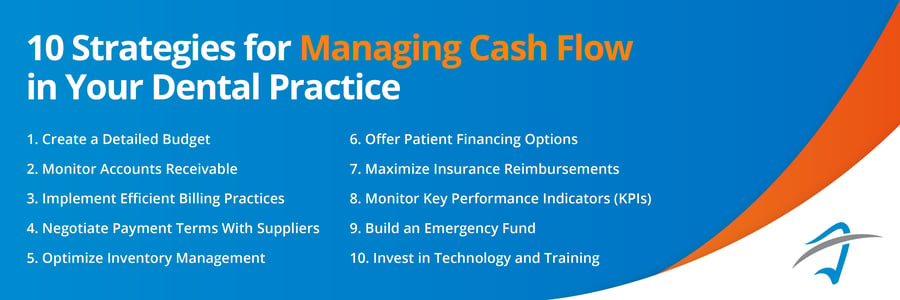
1. Create a Detailed Budget
Develop a comprehensive budget that outlines all expenses, including:
- Rent
- Utilities
- Salaries
- Supplies
- Equipment maintenance
- Marketing
Having a clear understanding of your financial obligations will help you make informed decisions about spending and revenue generation.
2. Monitor Accounts Receivable
Keep a close eye on accounts receivable to ensure that outstanding payments from patients and insurance companies are collected promptly. Implement efficient billing and follow-up procedures to minimize overdue accounts.
Consider offering discounts for early payments to incentivize timely payments.
3. Implement Efficient Billing Practices
Streamline your billing processes to reduce delays in receiving payments. Utilize electronic billing systems to send invoices promptly and offer multiple payment options to patients, such as credit cards, online payments, and payment plans.
4. Negotiate Payment Terms With Suppliers
Negotiate favorable payment terms with suppliers to improve cash flow. Request extended payment terms or discounts for early payments to reduce the financial strain on your practice.
5. Optimize Inventory Management
Maintain optimal levels of inventory to minimize tying up cash in excess supplies. Regularly monitor inventory levels and adjust orders based on demand to avoid overstocking or running out of essential supplies.
6. Offer Patient Financing Options
Partner with financing companies to offer patient financing options for expensive procedures. This can help patients afford treatments while ensuring that your practice receives payment upfront, improving cash flow.
7. Maximize Insurance Reimbursements
Stay updated on changes in insurance policies and coding requirements to maximize insurance reimbursements. Proper coding and documentation can help expedite the reimbursement process and ensure that you receive the full amount owed for services rendered.
If this is an area of concern for you, please reach out to our team regarding our strategic partners who specialize in this critical area of your practice. They can help identify the profitability of insurance carriers you may work with and individual clinical procedures for accurate fee schedules.
This is always powerful information to have as you navigate the complexities of working with insurance carriers and dental networks.
8. Monitor Key Performance Indicators (KPIs)
Track KPIs such as revenue, expenses, collections, and accounts receivable turnover ratio regularly. Analyzing these metrics will help you identify trends, pinpoint areas for improvement, and make informed decisions to optimize cash flow.
9. Build an Emergency Fund
Set aside funds for unexpected expenses or periods of low revenue to cushion your practice against financial hardships. Having an emergency fund can provide peace of mind and help you navigate through challenging times without jeopardizing the financial health of your practice.
10. Invest in Technology and Training
Invest in technology and training to improve efficiency and productivity in your practice. Modern software solutions can streamline administrative tasks, reduce errors, and enhance patient communication, ultimately leading to improved cash flow.
Elevate Your Practice’s Financial Health and Secure Long-Term Success
By implementing these strategies and maintaining a proactive approach to managing your practice’s finances, you can enhance cash flow, mitigate financial risks, and position your dental practice for long-term success.
For even more tips for launching and managing a thriving dental practice, download our free Dental Practice Start-Up Manual. Whether you’re a recent graduate eager to establish your own practice or an experienced practitioner seeking to expand your entrepreneurial ventures, this guide offers invaluable insights to help you succeed.